
How does Core dna handle multiple brands on one platform?
Each brand is configured as a tenant on a shared platform. Each tenant has its own domain, storefront, brand identity, content, and merchandising.
Each brand is configured as a tenant on a shared platform. Each tenant has its own domain, storefront, brand identity, content, and merchandising. The catalog primitives, customer graph, pricing engine, and back-office integrations are shared across tenants. You decide per data class what is shared and what is brand-scoped: SKUs, customers, inventory, loyalty, reporting. Add a brand by configuring a new tenant in admin, not by buying another platform.
Reading
Related posts
 eCommerce
8 Best B2B eCommerce Platforms of 2026
 Platform & Architecture
Salesforce Is Buying Braze for $5.66 Billion. What Does That Say About Marketing Cloud?
 Platform & Architecture
Saba Cloud Alternatives: 6 LMS Platforms for Training Customers, Members and Partners
 Platform & Architecture
7 Best Unified Commerce Platforms for Retailers
 Platform & Architecture
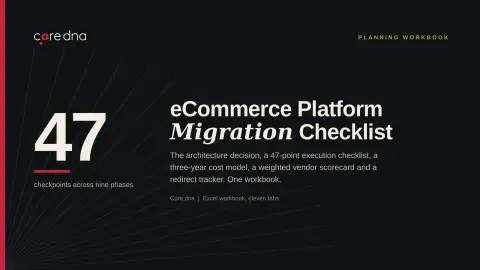
eCommerce Platform Migration: A 47-Point Checklist for 2026
 Platform & Architecture
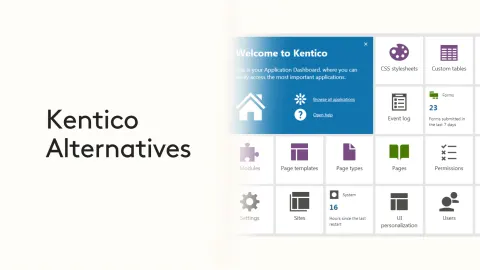
Kentico Alternatives for Multi-Property Operators