One platform instead of three
Save a Life replaced WordPress, a standalone LMS and a separate store with one system for content, commerce and certification.

Core dna runs your courses, certifications, memberships, checkout and website on one platform, with one learner record from first purchase to renewal.
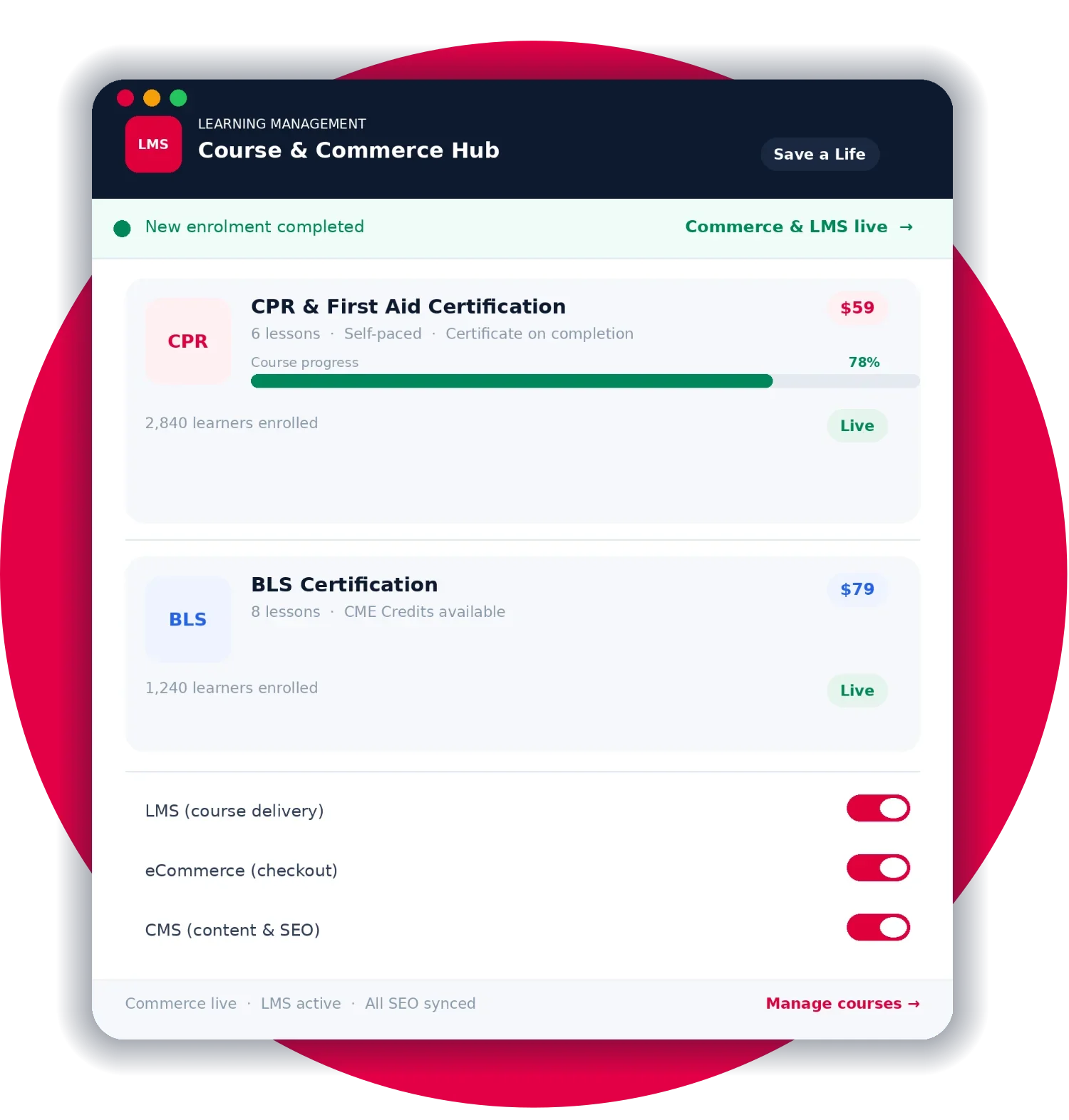
Save a Life replaced WordPress, a standalone LMS and a separate store with one system for content, commerce and certification.
YMCA of Greater Toronto moved Ignite's SCORM courses and learners from Absorb onto the Core dna setup that already runs its website.
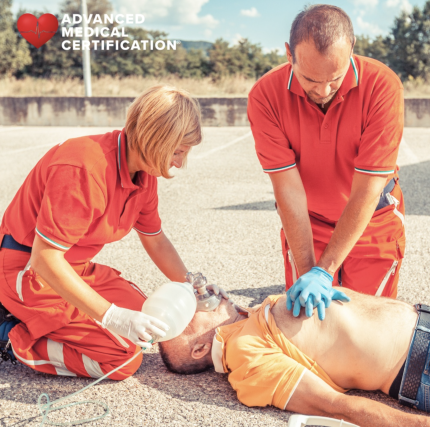
Certification, recertification, for-life and bundle products draw on the same course. Content changes once. Price, access and certificates follow the purchase.
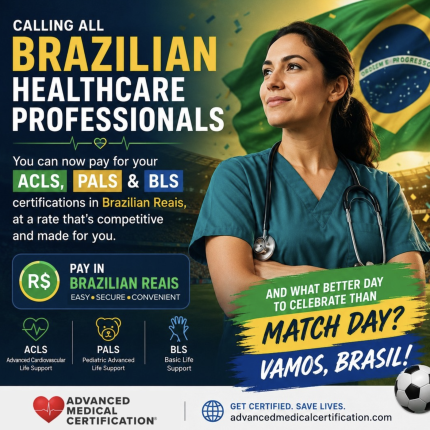
AI translation through MCP, a medical advisor approving every page, Spanish checkout and prices in local currency.
Most e-learning platforms and LMS software make you add a separate eCommerce tool, a CMS, and a membership plugin. Core dna ships all of it natively, in one admin, one database, one digital learning platform.

Build courses from modules, lessons, video and question banks in the CMS, or deliver SCORM and HTML5 packages. Both run under the same access rules and reporting.

Progress, completions, scores and revenue sit on one data model. Export to CSV or Excel, use the REST API, build role-scoped dashboards, or ask questions in plain language through MCP.

Hosted on AWS across at least two availability zones, with autoscaling for renewal peaks, a web application firewall, DDoS protection, quarterly penetration testing and point-in-time backups.

Gate courses and member pages by membership tier, group or product line, across one site or several, with the same permissions engine that runs the rest of the platform.

Your marketing team runs course pages, free pre-tests, practice tests and campaign landing pages in the same editor as the rest of the site, with no developer queue.

Renewal reminders, course assignments and certificate emails run as Orchestration jobs in the admin. Stripe is built in. CRM and ERP systems such as HubSpot, Salesforce and NetSuite connect through Orchestration.
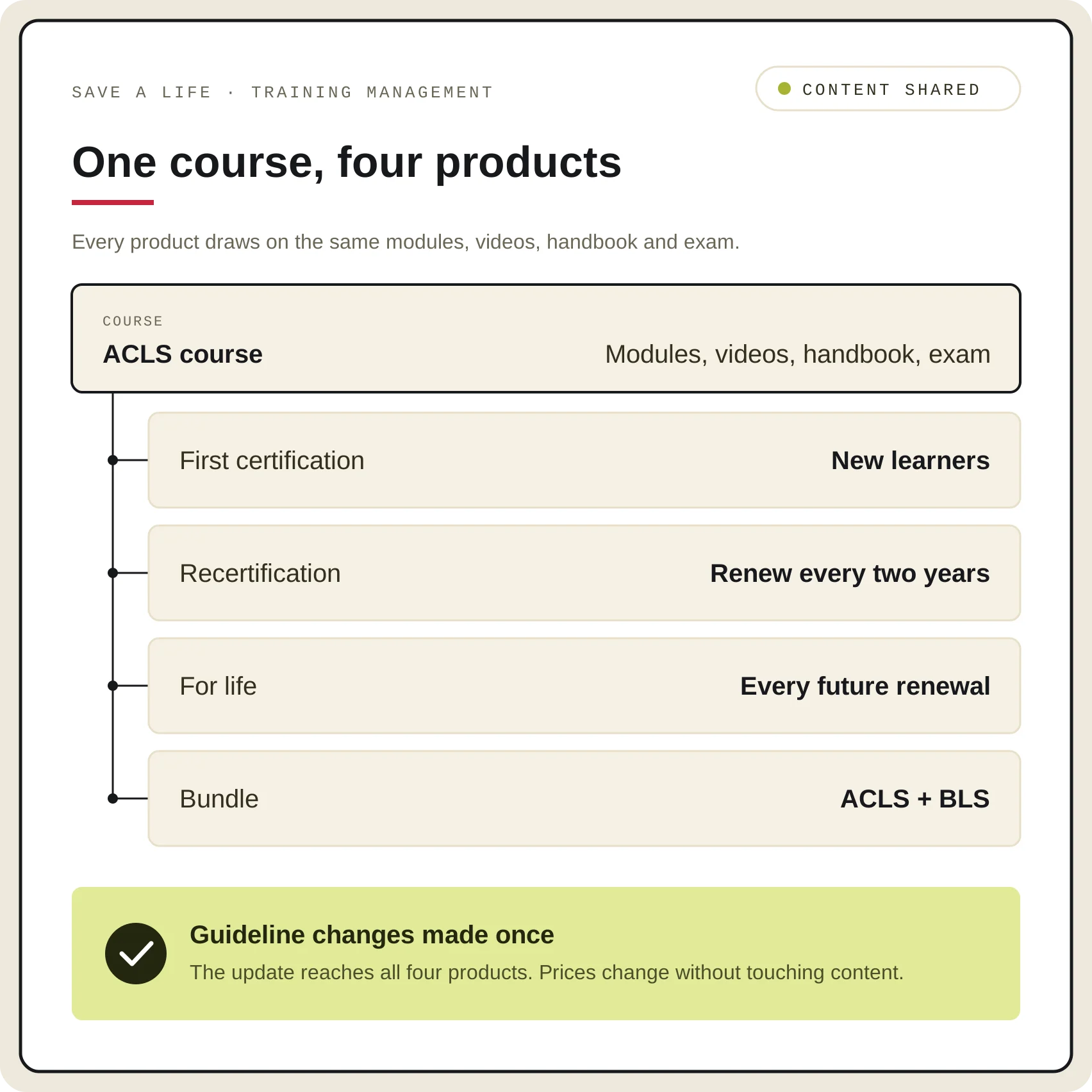
Each course exists once and links to every product that sells it, so a first certification, a recertification, a for-life product and a bundle all draw on the same modules and exam.
Certificate rules, credit types and renewal cycles are fields on the course and enrolment records, so they follow your accrediting body's rules.
A completed checkout creates the enrolment and opens the course. No manual step sits between payment and the first lesson.
Questions are drawn from a question bank and mixed on each attempt. Scores and pass dates are stored against the enrolment.
A personalized PDF is issued on passing, with the issue date, a renew-by date and a QR code for verification. Continuing education certificates can be issued separately for accredited courses.
Reminders go out ahead of expiry. Each renewal creates a new enrolment with its own dates, attempts and certificate, and earlier records stay in the learner's history.
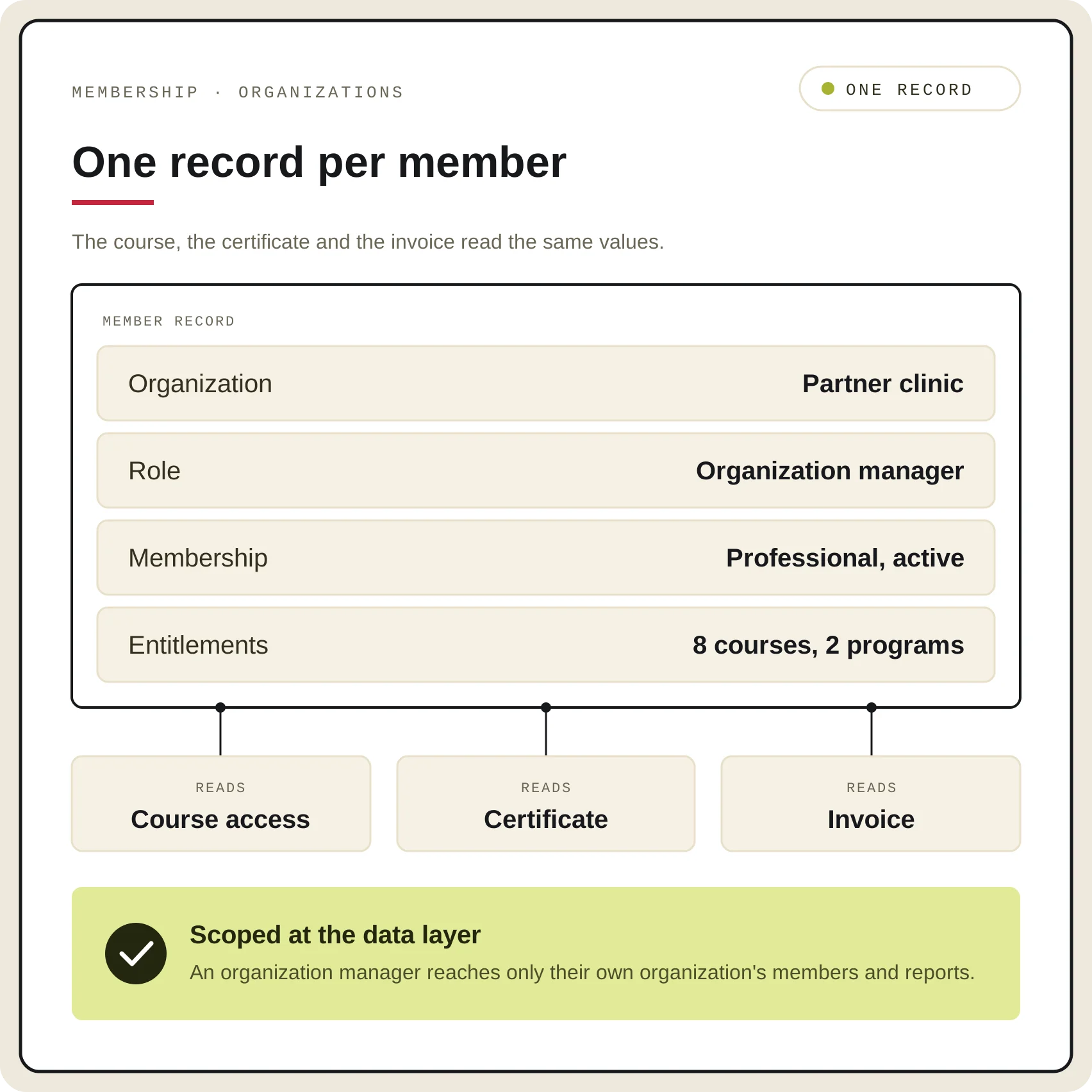
Core dna holds each organization, its members, their roles and their entitlements on the same record that the course, the certificate and the invoice read from.
YMCA of Greater Toronto runs its corporate site, 30 microsites and its Ignite learning platform from one administration, with user records shared between the website and the LMS.
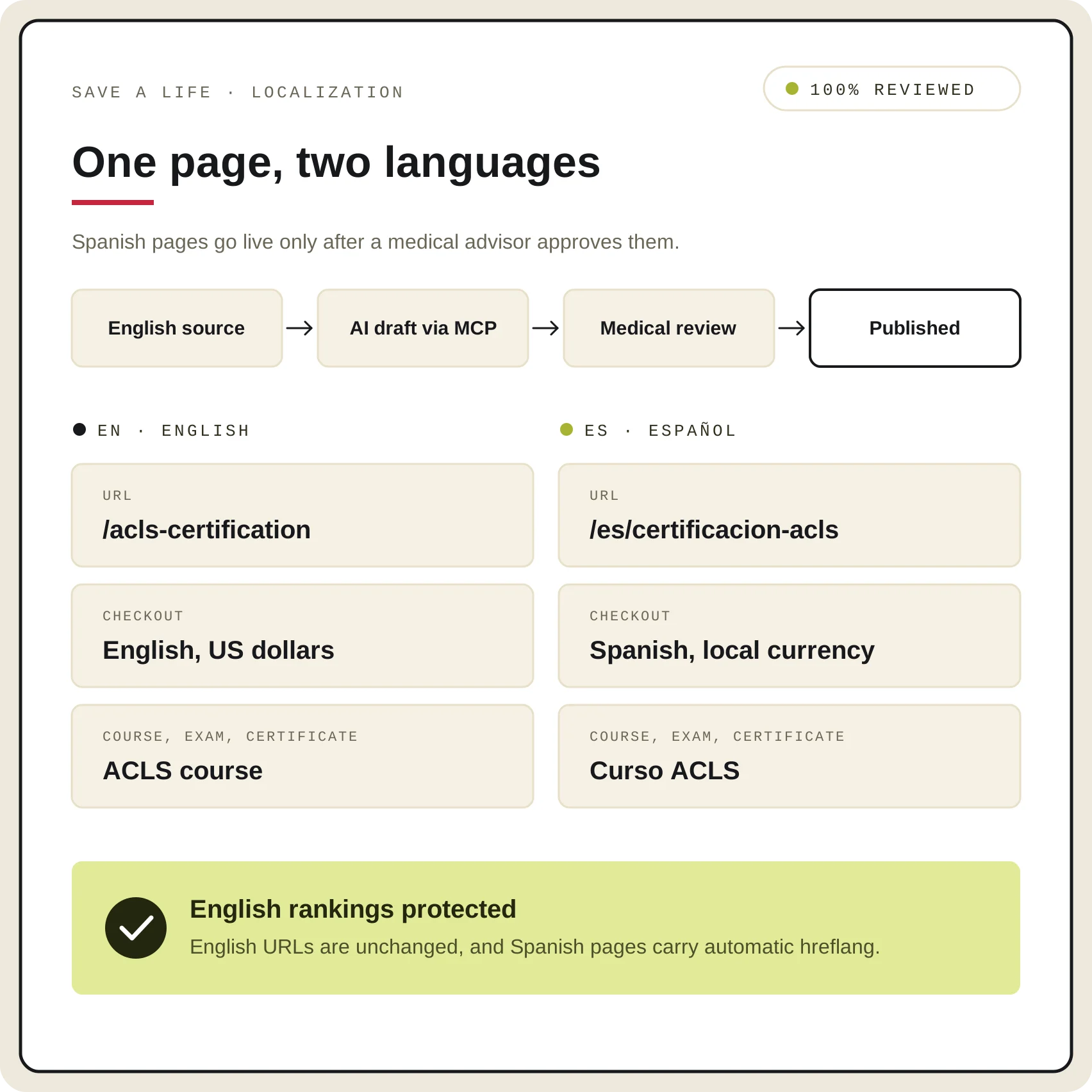
Run your site, courses and checkout in each market's language and currency. An AI agent can draft translations through Core dna's MCP layer, and your reviewers approve each page before it goes live. Save a Life localized about 1,700 pages of clinical content for Spain and Latin America this way.
AI agents and MCP for learning operations
Core dna's MCP server connects an AI assistant such as Claude to your platform, with the signed-in administrator's exact permissions. It is off by default, and nothing on the platform depends on it. See how MCP works on Core dna.
Agents write translations and content changes as unpublished revisions for your reviewers to approve. Save a Life localized its catalog this way.
Administrators ask about enrolments, completions and orders in plain language. Answers are limited to what that person is allowed to see.
Each agent can only use the tools on its allow-list. Agents can record a recommendation for a person to approve, and every run is logged.
Use your own Anthropic, OpenAI or Google account and keys, with a monthly spend cap. Learner and course data is not used to train models.
Core dna is built for teams who are done maintaining three tools to run one education business.
Timelines are set in discovery. A catalog with standard access rules goes live faster than a certification model with credit types and annual resets.
We work through roles, membership and pricing logic, the certificate model, integrations and reporting with your team. One early decision is how courses are delivered: SCORM packages, or courses authored in the platform.
Production, staging and development environments are included. Your team tests enrolment, access and checkout before any learner sees them.
Members, orders, enrolments, completions and certificates are mapped, trial-migrated into staging and reconciled against the source. Redirects keep existing pages and rankings in place.
Core dna's own staff scope, build and support the platform. You keep the same people after go-live, with no implementation partner in between.
Docebo, TalentLMS, and LearnUpon are serious enterprise learning management systems. All three handle e-learning delivery well. The gap appears when you need commerce built for courses, a public-facing marketing site, or multi-site architecture. Selling course access usually means an add-on or a third-party store, and none of the three has a built-in CMS.
| Capability |
Core dna
|
Docebo
|
TalentLMS
|
LearnUpon
|
|---|---|---|---|---|
|
LMS features (courses, quizzes, SCORM, certs)
|
Native | Native | Native | Native |
|
Subscription & membership billing
|
Native | Via integration | Via Stripe add-on | Via integration |
|
Built-in CMS (marketing site + portal)
|
Native | Separate tool | Separate tool | Separate tool |
|
eCommerce (sell courses + products)
|
Native | Needs Shopify | Basic, built in | Needs Shopify |
|
Multi-site from one instance
|
Native | Enterprise only | Limited | Limited |
|
LMS integrations (ERP, CRM, SSO)
|
Configured in the admin | Strong | Basic | Moderate |
|
No. of vendors required
|
1 | 2–3 | 2–3 | 2–3 |
|
Fully managed cloud LMS (no DevOps)
|
Included | Included | Included | Included |
Yes. Core dna is one of the few platforms that ships LMS, CMS, and eCommerce natively in a single instance. You can build structured courses with lessons, quizzes, and certificates, and sell them via one-time purchase or recurring subscription, all managed from the same admin dashboard. No separate billing tool or LMS plugin required.
Yes. SCORM and HTML5 packages run inside the course structure, and a learner who closes a course picks up near where they stopped. YMCA Ignite runs its SCORM courses on Core dna after moving them from Absorb. Courses can also be authored in the platform as lessons, question banks and assessments, which makes credit types, versions and certificate rules reportable. The choice is made per catalog during discovery.
Yes. Recertification can be sold as its own product on the same course. Each renewal creates a new enrolment with its own exam attempt and certificate, and earlier certificates stay in the learner's account. Save a Life sells each course as a first certification, a recertification, a for-life product and part of a bundle.
Yes. Accredited courses can issue a separate continuing education certificate alongside the completion certificate, and credits can be sold as their own product. Advanced Medical Certification sells CME credits on its ACLS practice test course.
Yes. Save a Life runs its site, courses and checkout in English and Spanish, with prices in several currencies. Spanish pages sit under /es/ with automatic hreflang, so English rankings are unaffected, and each Spanish course has its own exams and certificate.
Core dna handles both natively. Most learning management systems, including Docebo, need a third-party billing tool or integration to manage recurring subscriptions. Core dna builds subscription billing into the same platform as the LMS, with Stripe checkout and access granted automatically on payment.
Yes. Members, orders, enrolments, completions and certificate records are mapped to Core dna, trial-migrated into staging and reconciled against the source before launch. Historical certificates can be regenerated from the migrated records, and redirects keep existing pages and rankings in place. Save a Life moved from WordPress, a standalone LMS and a separate store, and YMCA Ignite moved its SCORM courses and learners from Absorb.
Yes. Core dna is a fully managed, cloud-based LMS platform, with no servers to run and no infrastructure to maintain. It is delivered as SaaS, with hosting, security and upgrades handled by Core dna. Timelines are set in discovery: a catalog with standard access rules goes live faster than a certification model with credit types and annual resets.
One subscription covers software, hosting, security and support. There are no transaction fees on course sales and no per-learner licensing. Cost depends on scope: the certification model, integrations and migration volume.
Docebo and TalentLMS are strong learning management systems for internal and customer training. Both can sell course access through basic built-in checkout, add-ons or a third-party store, but neither has a built-in CMS for a public-facing marketing site. Core dna ships LMS, commerce and CMS natively, with one platform, one admin and one vendor, which suits organizations where education is a revenue line.



Ready to run every digital property from one place?
What to expect: a 30-minute tailored walkthrough of how Core dna fits your sites, stores, systems, and teams.